FOR IMMEDIATE RELEASE
- Region delivers on host city commitments, builds new capabilities for future opportunities
- Hundreds of partners collaborated to deliver a safe, memorable experience
- Kansas City elevates reputation as a destination for sports, business and culture
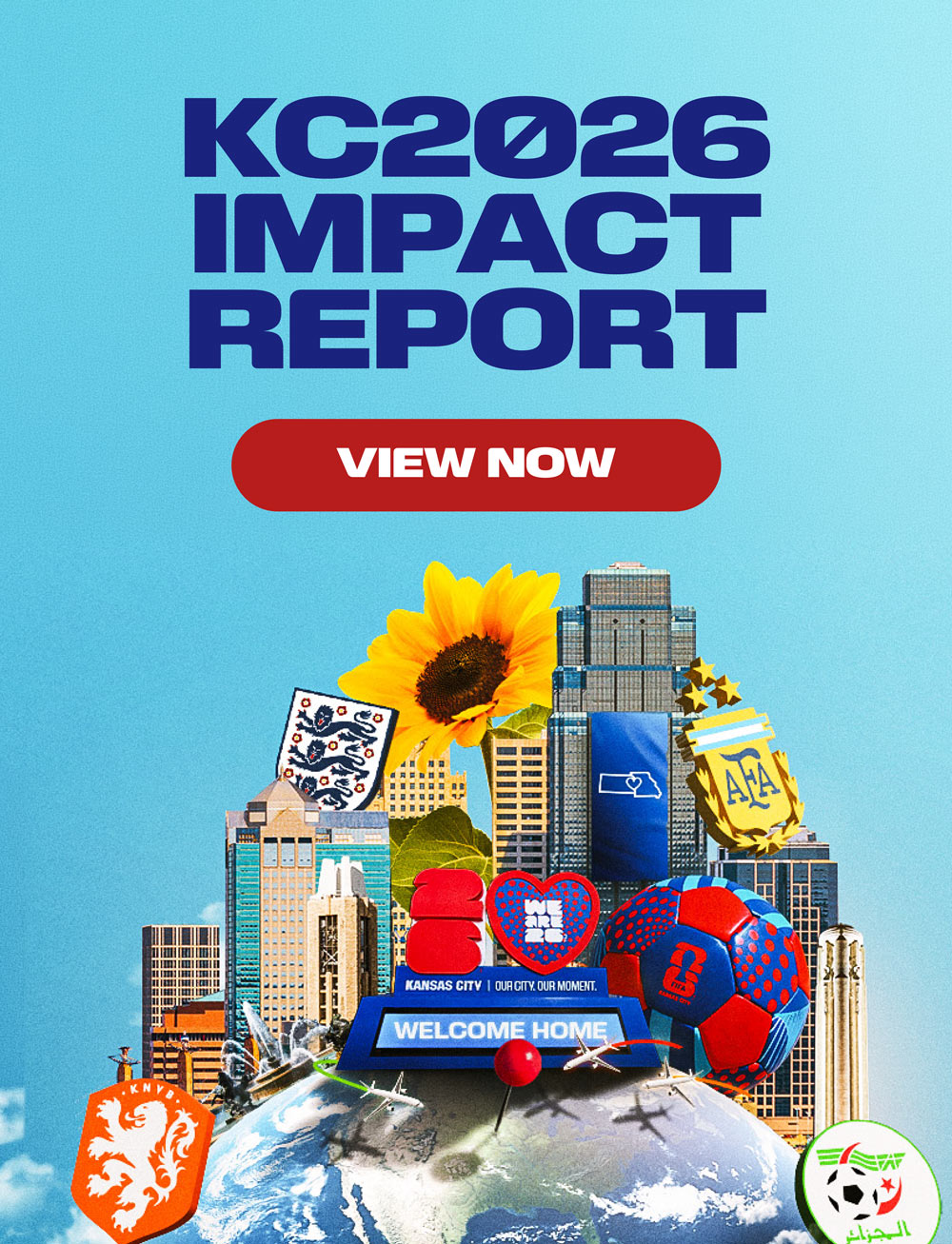
KANSAS CITY, Mo. (Nov. 17, 2026) — Tuesday, KC2026 released its Community Impact Report, documenting how the smallest host market for the FIFA World Cup 26™ united to deliver on the world stage, and what the experience means for Kansas City’s future.
The report chronicles the region’s achievements in delivering a safe, memorable tournament experience that was ‘distinctly Kansas City.’ Beyond the operational milestones, it examines the economic and community impacts, partnerships and key learnings that can help the region build on its elevated global visibility. The report showed that most visitors left with favorable impressions of the Kansas City region and expressed a desire to return for future athletic events.
“We showed the world what the Kansas City region is capable of when we work together,” said Pam Kramer, CEO of KC2026. “But just as important as what we accomplished is what we do with the momentum we’ve created, and how we apply what we learned. We now have firsthand experience, stronger regional relationships and a clearer understanding of how to turn the visibility of major events into lasting value for our communities.”
The KC2026 Community Impact Report, including detailed findings and methodology, is available at KansasCityFWC26.com/kc2026-impact-report/
A Region That Delivered
Kansas City hosted six matches and fulfilled its core host city commitments for transportation, safety and security, and the FIFA Fan Festival™, supported by extraordinary regional collaboration.
Kansas City hosted four national team base camps — Argentina, England, the Netherlands and Algeria — and was the only host city to accommodate three teams ranked among FIFA’s top 10.
More than 240 stakeholders participated in tournament planning, including over 80 public safety agencies whose coordinated efforts helped deliver a tournament with zero severe emergency incidents. ConnectKC26 doubled regional public transit capacity during the tournament, supporting more than 333,000 passenger journeys, with 90% of surveyed riders rating their experience good or excellent.
Across Kansas and Missouri, businesses, civic organizations, communities and thousands of volunteers contributed to a distinctive World Cup experience that reflected the region’s hospitality and pride. Among surveyed visitors who had attended a previous World Cup, 87% rated their Kansas City experience better or significantly better than experiences in other host cities.
A Global Stage for Kansas City
The tournament also provided an unprecedented platform to showcase Kansas City’s business, cultural and innovation assets to international audiences.
At KC•House, the region’s executive hospitality and business engagement platform, civic and business leaders connected with international delegations, corporate decision-makers and industry leaders, cultivating relationships and opportunities that extend beyond the tournament. Among the initiatives launched during the World Cup was the Global Cattle Innovation Platform, which recently received catalytic funding from the Bezos Earth Fund. The Kansas City-based initiative aims to accelerate a global, producer-driven approach to innovation across beef and dairy systems.
“The World Cup gave Kansas City a chance to show the world who we are,” said Tim Cowden, president and CEO of the Kansas City Area Development Council. “We’re already seeing that momentum translate into meaningful opportunities, including 23 international trade missions and engagements and at least four new corporate expansion projects. Those are important early signs of what’s possible. The World Cup was a 39-day tournament — we’re working hard to make it a 30-year opportunity.”
Lessons to Guide the Next Chapter
Beyond celebrating the region’s achievements, the report offers a candid assessment of what worked, how the experience varied from expectations and what Kansas City can apply to future major events.
Seven key lessons reinforce the importance of using newly acquired data and experience to elevate regional collaboration, early public-private partnerships, realistic forecasting and strategies tailored to the circumstances of individual businesses and communities.
The report also acknowledges that while major events generate substantial economic activity, the benefits are not evenly distributed. Increased visibility and visitor demand do not automatically translate into increased revenue for every business. Realistic expectations, timely market intelligence and proactive planning can help businesses better capitalize on future opportunities.
Building on the Momentum
The relationships, capabilities and global visibility established through the tournament provide a foundation for continued growth. The KC2026 Board of Directors has established a Legacy Committee that is identifying ways to apply the tournament’s achievements and lessons to future initiatives that strengthen Kansas City’s position as a destination for sports, business and culture.
“The World Cup gave Kansas City a moment on the world stage,” Kramer said. “What we choose to do next will determine whether that moment becomes a lasting advantage.”
###
About KC2026
A nonprofit organization that delivered impact and sustained legacy for Kansas and Missouri through its strategic delivery of Host City duties for the FIFA World Cup 2026™. KC2026 planned, constructed and implemented all aspects of the region’s largest sports and fan engagement event, to date.
KC2026 planning efforts were supported by its Official Kansas City World Cup 2026 Host City Supporters: Black & Veatch, Hallmark, JE Dunn Construction, Purina PetCare, Populous, The University of Kansas Health System, Kansas City Chiefs, Kansas City Royals and Sporting Kansas City. These global and regional companies are leaders in their respective industries and represent key sectors of KC’s economy. Host City Supporters are civic and brand partners that helped bring the FIFA World Cup 2026™ to life in Kansas City. Learn more at KansasCityFWC26.com.